Direct Democracy Global Network
Swiss-Inspired  ·  Voter-Led  ·  AI-Assisted

Re-Invent Democracy
for the 21st Century

Empowering voters worldwide to exercise political sovereignty — guided by Swiss tradition and powered by patented AI consensus technology.

Voters silhouette
Patented AI System 20 Priority Categories Swiss Roots Since 1291 Global Network
📋

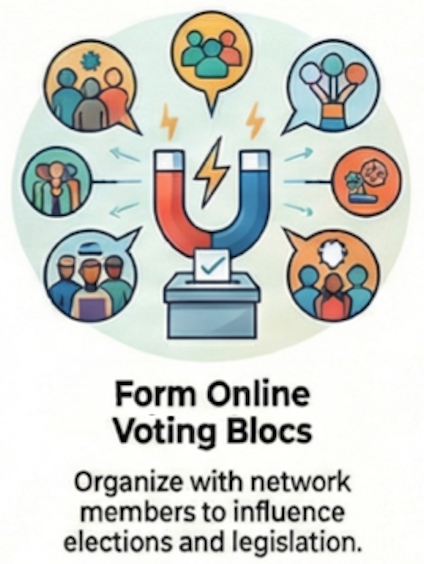
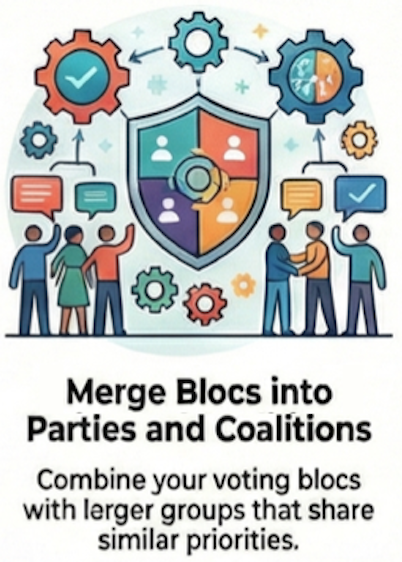
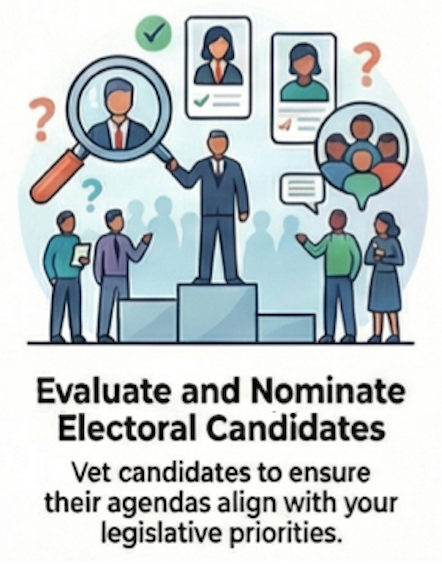
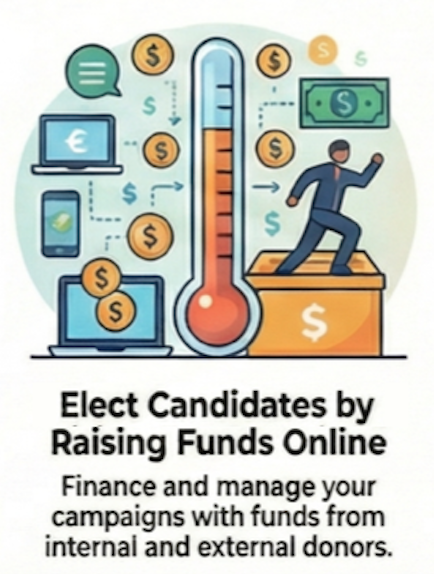
Ten Steps to Direct Democracy

A proven pathway for voters to exercise their political sovereignty, as Swiss voters have been doing for centuries.

Patented AI Technology

USPTO Patent #11,935,141 — Decision-assisting AI for voter consensus building

📋

20 Priority Categories

Six major policy domains covering all aspects of democratic governance

🏔

Swiss Democratic Roots

Seven centuries of direct democracy principles adapted for global use

🌐

Global Launch Underway

Early members shaping the platform in 195+ countries

US Patent

Decision-Assisting AI System for Voter Electoral and Legislative Consensus Building

A computer-implemented social network using AI and machine learning to help voters define legislative priorities, fact-check proposals, debate issues, and build consensus across partisan lines — enabling voting blocs and electoral coalitions to enact common agendas.

US Patent No. 11,935,141  ·  View Patent →

The Problem We Solve

Electoral and legislative processes generate partisan conflicts that remain unresolved due to a lack of cross-partisan consensus-building mechanisms. Voters lack the tools to define shared priorities.

The AI-Powered Solution

Our patented network combines AI-based machine learning with agenda-setting, consensus-building, and political organizing mechanisms — giving voters decision support to build coalitions across party lines.

Political Sovereignty

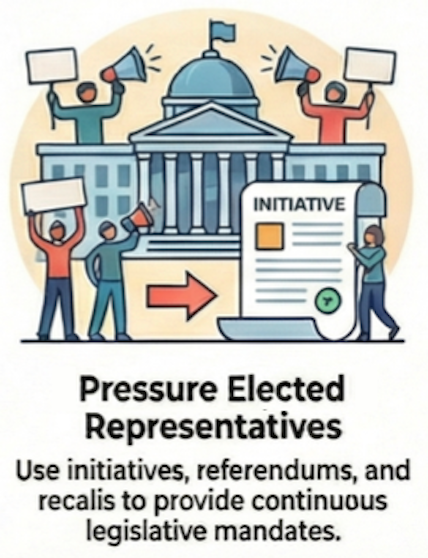
Following Rousseau’s Social Contract and Swiss direct democracy, DDGN gives citizens the tools to initiate referendums, build agendas, and elect lawmakers who enact voter-defined priorities.

Cross-National Scope

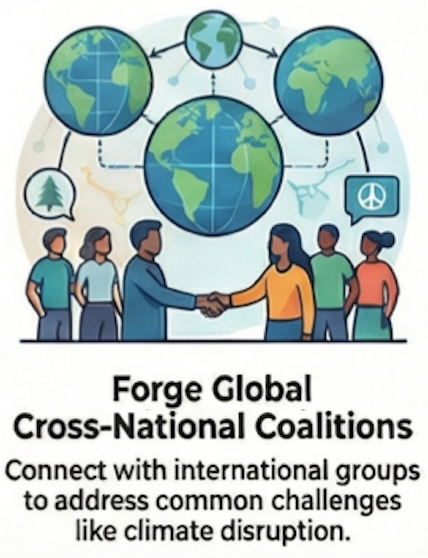
The network connects voters within and across election districts and national boundaries, building consensus with the cross-national scope needed for 21st-century democracy.

Open to All Users

Users include individual voters, lawmakers, candidates, political parties, civil society organizations, and NGOs — all able to access AI decision support and participate in the consensus process.

Network Launch Phase

DDGN is in its founding phase. Early participants help pilot the platform in their communities and shape the standards for direct democracy practice globally.

I. Financial Security and Basic Needs

Prioritizes direct provision of resources necessary for survival and stability, ensuring a safety net for all citizens.

Priority 1

Universal Basic Support

Adequate Lifelong Basic Income ensuring people can pay for housing, food, medical care, and education. Addresses poverty, economic inequality, UBI, and safety nets.

Priority 2

Essential Living Standards

Livelihoods (wages, cost of living), Housing & Urban Development (affordability, homelessness), and Agriculture & Food Policy (food security, hunger elimination).

II. Health, Education, and Social Services

Focuses on the physical and intellectual well-being of the population.

Priority 3

Healthcare

Health & Welfare, Public Health & Disease Prevention, Mental Health & Substance Abuse, and Reproductive Rights & Healthcare.

Priority 4

Education & Culture

K-12 Education (funding, curriculum), Higher Education (tuition, student debt), Arts, Culture & Humanities.

Priority 5

Social Support

Social Security & Retirement, Aging & Elder Care, Child Welfare & Family Services, Veterans Affairs.

Priority 6

Substance Regulation

Drug Policy & Decriminalization (treatment focus), Tobacco, Alcohol & Substance Regulation (public health).

III. Economic Systems, Labor, and Commerce

Manages broader financial structures, market regulations, and workforce protections.

Priority 7

Macroeconomics

Economy (growth, inflation, national debt), Tax Policy & Reform, Financial Regulation & Banking.

Priority 8

Business Regulation

Corporate Governance, Antitrust & Competition Policy, Trade Policy & Globalization, Small Business & Entrepreneurship.

Priority 9

Workforce & Rights

Labor Rights & Workplace Policy, Consumer Protection, Intellectual Property Rights.

IV. Governance, Rights, and Justice

Covers the machinery of democracy, civil liberties, and the legal system.

Priority 10

Democratic Institutions

Federal Government structure, Local/State Government, Electoral Reform & Voting Rights, Media & Press Freedom.

Priority 11

Civil Liberties & Equity

Civil & Political Rights, Privacy, Racial Justice, Women’s Rights, LGBTQ+ Rights, Indigenous Rights, Disability Rights, Religious Freedom.

Priority 12

Legal System

Criminal Justice & Law Enforcement, Police & Judicial Reform, Incarceration & Prison Reform, Gun Policy & Second Amendment.

V. Environment, Infrastructure, and Resources

Manages the physical world, utilities, and ecological sustainability.

Priority 13

Environment

Climate Change (emissions, renewables), Environmental Protection (pollution, biodiversity), Animal Rights & Welfare.

Priority 14

Natural Resources

Water Resources & Management, Ocean & Maritime Policy, Land Use & Conservation.

Priority 15

Infrastructure

Infrastructure & Public Works (bridges, grids), Transportation (transit, aviation), Energy Policy.

Priority 16

Communications

Telecommunications Policy (broadband, net neutrality), Postal Service & Communication Infrastructure.

Priority 17

Emergency Management

Disaster Preparedness & Emergency Management — resilience against natural disasters.

VI. Security, Technology, and Global Affairs

Addresses national safety, international relations, and technological advancement.

Priority 18

Technology & Innovation

Technology & Digital Rights (AI regulation, digital privacy), Science & Research Funding, Space Policy & Exploration.

Priority 19

Security & Borders

Defense spending and counter-terrorism, Immigration & Border Policy (border management, asylum, citizenship pathways).

Priority 20

Global Relations

International Relations — diplomacy, foreign aid, and global alliances.

1291
Switzerland

The Alpine Founders

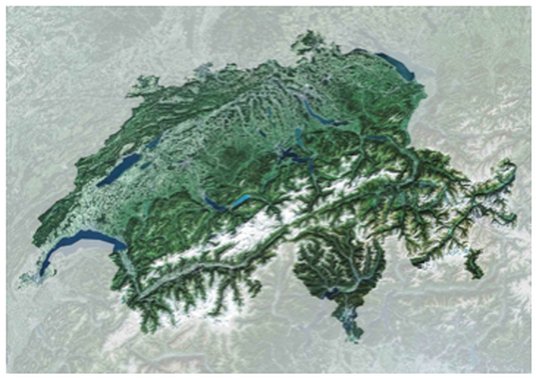
Mountain communities in what is now Switzerland created cooperative governance structures giving ordinary citizens direct say over collective decisions — the earliest roots of modern direct democracy.

1762
Geneva

Rousseau’s Social Contract

Jean-Jacques Rousseau, born in Geneva, published his landmark treatise arguing that political authority derives solely from the people — and that citizens must actively exercise sovereignty to preserve it.

1848
Swiss Federal State

Constitutional Referendum Rights

Switzerland’s modern federal constitution was adopted, enshrining referendums and citizen initiatives as core instruments of democracy at both the cantonal and federal levels.

1891
Milestone

Citizen Initiative Right Established

Switzerland granted citizens the formal right to propose constitutional amendments through the initiative process — cementing it as the world’s leading laboratory for participatory governance.

2022
Patent Granted

AI Consensus Technology Patented

USPTO grants Patent #11,935,141 — a decision-assisting AI system for voter electoral and legislative consensus building. The technological foundation of DDGN is established.

Today
DDGN

Taking Direct Democracy Global

The Direct Democracy Global Network is now adapting proven Swiss practices — combined with patented AI consensus technology — to empower voters everywhere to exercise genuine political sovereignty.

Become an Early Member

Early members pilot the AI consensus platform, help define the 20 priority categories in their country’s context, and set the global standard for direct democracy practice.

Thank you — we will be in touch as the network launches.

Contact: [email protected]

Community Organizers

Lead pilot programs in your city or region using the DDGN framework and AI tools.

Researchers & Academics

Study, document, and improve direct democracy outcomes across political contexts.

Technologists

Build on and integrate with DDGN’s patented AI consensus infrastructure.

Advocates

Spread the case for direct democracy and voter sovereignty in your country.

Lawmakers & Candidates

Use the network to understand voter priorities and build cross-partisan coalitions.

Civil Society & NGOs

Connect your organization’s agenda to the broader voter consensus-building process.